Originally published on Sep 30, 2025 on my unjustly-suspended Substack
I was probably 12 or 13 when I first discovered the concept of naturism, in a travel book about what was then Yugoslavia. It immediately made sense to me, because what value does swimwear actually serve? When it’s hot, particularly as a kid, you always want to wear as little as possible. But I grew up in a conservative Christian home, still poisoned by toxic purity culture and the body shame lie, so it wasn’t really something I could talk about at the time. Looking back, I really wish I’d been bolder.
Studies have shown, time and time again, that young people who grow up in more clothing-relaxed environments have better self-image, a better handling of puberty, they’re less promiscuous, they integrate better with others (particularly different age groups), develop fewer eating disorders, experience less body and gender dysmorphia, have fewer unplanned pregnancies, have better hygiene, watch less unsavoury material, and relate better to their parents. Don’t we want that for all our young people?
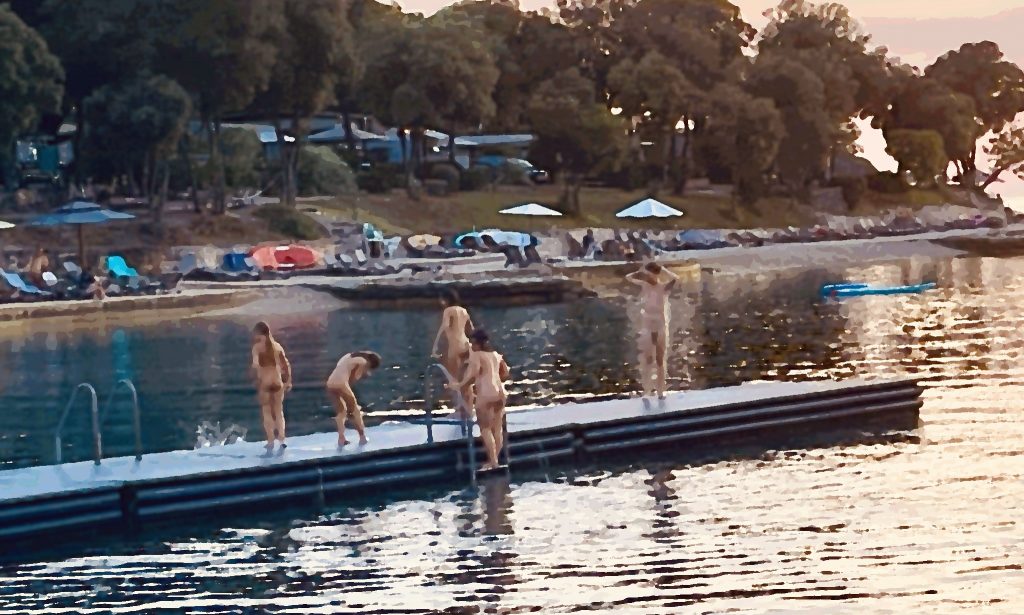
Over the last few years I’ve gotten to know some amazing younger people. Some grew up in more traditional homes, but came to appreciate the freedom of being clothes-free in their own time, whether skinny-dipping with friends, enjoying nature the way it was meant to be, or whatever. Many of them were bold enough to introduce these concepts to their parents, and their lives were improved as a direct result.
Others grew up in homes that already embraced naturist living. They had an enviable closeness with siblings and parents, because where nothing is hidden, nothing is secret. This is why normalising healthy living is so important. I am envious of that, for sure. What better way to learn your way through life than by having a deep relationship with those around you, with no fear, no shame, no barriers to communication?
It’s not some crazy hippie ideal. Rather, it’s God’s original plan for humanity, that was only derailed by lies. Allowing the skin to breathe aids our thermoregulation (you actually stay warmer when it’s cold if you’re naked than if you’re wearing insufficient clothing, because the body can accurately respond to the conditions and warm you up); reduces bacterial growth due to sweat, sand, trapped ickiness; reduces inflammation in the body by helping us to ground our bodies to the earth; encourages more natural posture and movement. And that’s before the psychological benefits.
Many young people struggle with their body image. Everyone develops differently, everyone is unique – different shapes, different sizes, different stages of development. If you’ve never seen other naked bodies, it can be scary when changes start. And then you start squeezing it into ill-fitting clothing (or wearing baggy garments to hide the change in shape) and your self-image plummets. I’ve seen it time and time again. Being comfortable in your skin doesn’t prevent it, but it certainly helps. You know what will, or could, happen. And because you know every body is different, you don’t judge your imperfections so harshly.
I truly believe that naturism should be taught as part of PSHE (or whatever it’s called where you are) in all school curriculums. That it’s a viable option that can genuinely help young people feel more at home in their bodies, and that it can help people understand not just themselves but each other. And of course all swimming should be done naked, because swimwear helps nobody, encourages body shame, and anyone who’s ever skinny-dipped would never choose to swim dressed again!
Our younger people today are amazing. They know to see beyond the media BS that has plagued their parents’ generation. Unfortunately certain parts of society seek to restrict their exposure to healthy lifestyle choices. It’s time we started helping our youth understand how to see themselves and each other better, and naturism is a really powerful tool for that.